
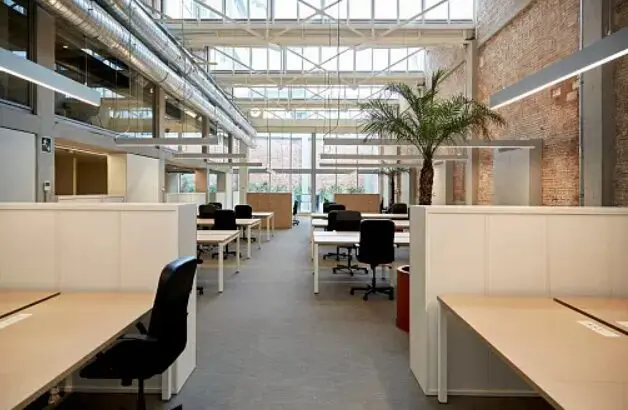
The COVID-19 pandemic has brought about a significant upheaval in the way we work and live. Among the many changes observed, the transformation of office spaces into residential units has emerged as a notable trend. This transition, driven by economic, social, and environmental factors, presents both significant opportunities and challenges. This article explores the reasons behind this transformation, its implications, and key considerations to be taken into account.
Motivations for the transformation
Several factors contribute to the transformation of offices into residences:
Adaptation to new work dynamics: As more companies adopt remote work, the need for office space is evolving. Large office complexes that were once essential are now being questioned, leading to a shift towards more flexible space usage, including residential areas. This transition to more versatile workspaces paves the way for offices to be converted into residences, addressing the changing demands of the real estate market.
Urgent response to the housing crisis: The housing crisis has become a pressing issue in many regions, exacerbated by increasing urbanization and rising real estate prices. Converting underutilized offices into housing provides an opportunity to quickly and effectively address this crisis. By transforming these spaces into affordable housing, vital housing solutions can be provided for struggling populations.
Catalyst for urban revitalization: Declining urban neighborhoods are often characterized by significant office vacancy and a decrease in economic activity. Converting these spaces into housing can serve as a catalyst for revitalizing these neighborhoods. By attracting new residents and reactivating local economic activity, this transition promotes sustainable urban regeneration, transforming once neglected areas into vibrant and attractive neighborhoods.
Implications and consequences
While the transformation of offices into housing presents potential benefits, it also raises significant concerns:
Improved quality of life and renovated comfort: Converting offices into housing offers the opportunity to significantly improve residents’ quality of life. However, it is crucial to recognize that office spaces are not always suited to domestic needs. Extensive renovations may be necessary to ensure that the new housing provides adequate comfort and convenience, ranging from sound insulation to kitchen and bathroom layouts.
Impacts on urban balance and the environment: The massive conversion of offices into housing can have a significant impact on the urban environment. By transforming commercial areas into residential ones, this transition can alter the delicate balance between different types of urban spaces, thus influencing the social and economic dynamics of neighborhoods. Additionally, it may also pose challenges in terms of existing urban infrastructure, such as public transportation and utilities, which need to adapt to this new distribution of populations.
Preservation of socio-economic diversity: A major concern related to the transformation of offices into housing is the risk of socio-economic homogenization of neighborhoods. If this transition primarily focuses on high-end housing, it could exclude low-income populations, thereby contributing to gentrification and the disappearance of diverse and dynamic communities. Therefore, it is imperative to implement policies and measures to ensure that the transformation of offices into housing is carried out inclusively, thus preserving the socio-economic diversity of urban neighborhoods.
Conclusion
The transformation of offices into housing is an emerging trend with the potential to address several contemporary challenges, such as the housing crisis and changing work patterns. However, this transition requires careful planning to ensure positive outcomes economically, socially, and environmentally. By adopting a strategic and inclusive approach, cities can leverage this opportunity to create more dynamic, resilient, and inclusive urban environments.